


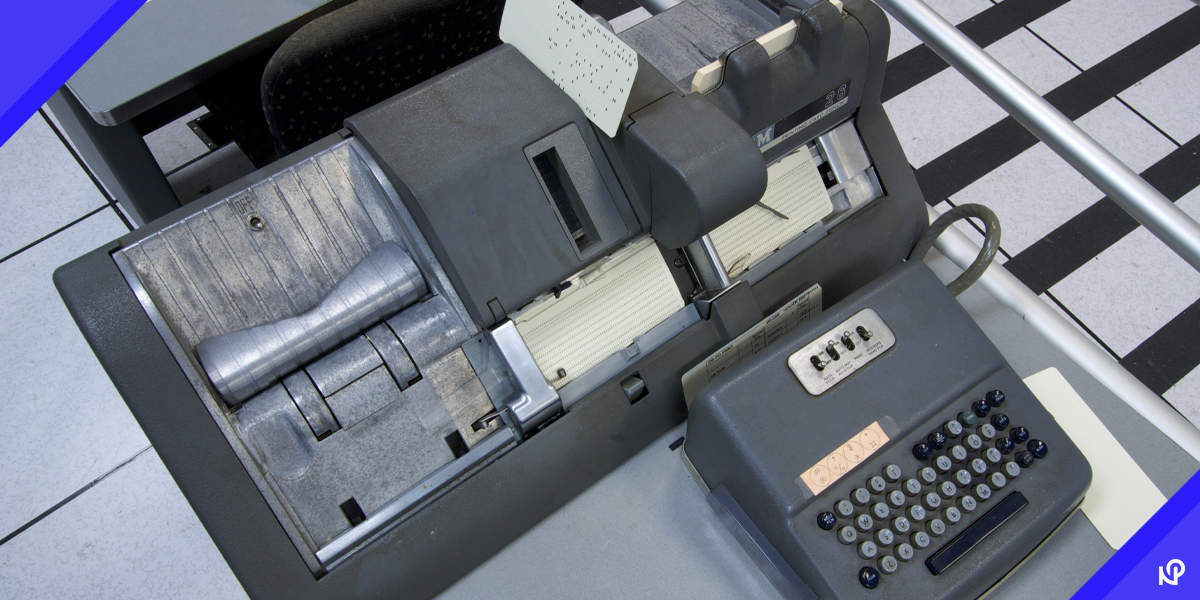
Long before touchscreens, cloud storage, and instant databases became part of everyday life, information had to be handled in a very different way. Early computers could not accept typed text or mouse clicks. Instead, they relied on physical methods to receive instructions and data. One of the most important technologies developed for this purpose was the keypunch.
Understanding how to define keypunch offers valuable insight into the early foundations of data processing. It explains how organizations managed massive amounts of information decades before modern computing tools existed. This article explores the meaning of keypunch, how it worked, its historical background, benefits, limitations, and its lasting influence on today’s digital systems.
Define Keypunch
To define keypunch, it refers to a data entry method and mechanical device used to encode information by punching holes into paper cards. These punched holes followed specific patterns that machines could read, interpret, and process. Each card represented a structured record of data.
Keypunch systems acted as a bridge between human operators and early computers. By converting typed input into a machine-readable format, they made automated data processing possible at scale.
What Is Keypunch?
When asking what is keypunch, the answer includes both the tool and the process. A keypunch machine looked similar to a typewriter, but instead of printing letters on paper, it punched holes into stiff cards. Each keystroke created a specific hole pattern that represented letters, numbers, or symbols.
As a process, keypunch refers to the method of encoding data so that machines could perform calculations, sorting, and reporting tasks efficiently.
Introduction to Keypunch Technology
Keypunch technology emerged at a time when data was growing faster than humans could process manually. Governments, businesses, and research institutions needed faster and more accurate ways to handle records.
By using punched cards, organizations could store large volumes of data in a standardized format. Machines could then read these cards repeatedly, making keypunch technology a turning point in administrative efficiency.
Meaning of Keypunch
The meaning of keypunch is rooted in its function. It represents a system where physical actions pressing keys and punching holes were used to create structured data. This data could then be processed mechanically rather than manually.
In practical terms, keypunch meant reliability, consistency, and speed compared to handwritten records and manual calculations.
Etymology of Keypunch
The word keypunch is formed from two descriptive elements. The term key refers to the keyboard used by the operator, while punch refers to the physical punching of holes into paper cards.
The term became widely used in the early twentieth century, particularly as punched card systems expanded through companies such as IBM and were adopted by governments and large corporations.
Historical Background
The origins of keypunch technology can be traced back to the late nineteenth century. One of the earliest large-scale uses occurred during national census projects, where rapid data analysis was essential.
Throughout the early and mid-twentieth century, keypunch systems became standard equipment in data centers. They supported payroll systems, banking operations, insurance records, scientific research, and military logistics.
How Keypunch Machines Worked
Keypunch machines operated through a carefully designed process. An operator typed data using a keyboard, and the machine punched corresponding holes into specific positions on a card.
Each card was divided into columns, with each column representing one character. The pattern of holes within a column defined the value of that character. Once punched, cards could be verified for accuracy and then fed into processing machines.
Structure of Punched Cards
Punched cards followed a strict layout that ensured consistency across systems. Rows and columns were standardized so that machines could read cards regardless of when or where they were created.
This rigid structure influenced later developments in data formatting and programming, where fixed-length records and strict syntax rules became common.
Types of Keypunch Systems
Several types of keypunch systems were used over time. Early manual machines required full operator control and were relatively slow. Later electromechanical keypunch machines improved speed and reduced errors.
Verification machines were introduced to check punched cards against original input, ensuring higher data accuracy. Sorting and tabulating machines often worked alongside keypunch systems to complete the data processing cycle.
Role of Keypunch in Data Processing
The role of keypunch in data processing was foundational. It enabled batch processing, where large groups of records could be processed together rather than individually.
This approach allowed early computers to perform complex tasks such as sorting lists, calculating totals, and generating reports. Without keypunch systems, large-scale automated data processing would not have been possible.
Use of Keypunch in Business and Government
Businesses relied heavily on keypunch technology for payroll, inventory management, and financial accounting. Governments used it to manage census data, tax records, and public programs.
Research institutions and universities applied keypunch systems to statistical analysis and scientific experiments. Across sectors, keypunch made data handling faster and more dependable.
Benefits of Keypunch Technology
Keypunch offered several important benefits during its time. It introduced standardized data entry methods that reduced inconsistency. It improved accuracy compared to handwritten records and supported large datasets efficiently.
For organizations dealing with millions of records, keypunch systems provided a level of organization and reliability that had not previously been possible.
Limitations and Challenges
Despite its advantages, keypunch technology had clear limitations. Physical cards required significant storage space and careful handling. Errors often meant re-punching entire cards, which was time-consuming.
The process also depended heavily on skilled operators, and data entry speed was limited compared to modern systems.
Keypunch vs Modern Data Entry Systems
Modern data entry systems are faster, more flexible, and entirely digital. However, many concepts used today such as structured input, validation, and batch processing originated with keypunch systems.
Understanding this comparison highlights how early technologies influenced the design of current computing tools.
Decline of Keypunch Technology
By the late twentieth century, advances in magnetic storage, interactive terminals, and personal computers made keypunch systems obsolete. Digital input methods eliminated the need for physical cards and manual punching.
As a result, keypunch machines were gradually phased out and replaced by more efficient technologies.
Legacy and Lasting Influence
Although no longer in active use, the legacy of keypunch remains strong. Many foundational ideas in computing trace their roots back to punched card systems.
Studying keypunch technology helps explain how modern data processing evolved from mechanical beginnings into the digital systems used today.
Final Thoughts
To fully define keypunch is to recognize its importance in the history of computing. It was more than a machine it was a system that transformed how data was recorded, processed, and understood.
While keypunch technology belongs to the past, its influence continues through the principles that shape modern information systems. Understanding it provides valuable context for anyone interested in the evolution of data processing.
FAQs
What does keypunch mean in computing?
In computing, keypunch refers to an early method of data entry where information was encoded by punching holes into paper cards. These cards were then read by machines to process and store data.
Why were keypunch machines important in early computers?
Keypunch machines were important because they provided a reliable way to convert human input into machine-readable form. Without them, early computers would not have been able to handle large volumes of structured data.
When was keypunch technology first used?
Keypunch technology began gaining use in the late nineteenth century and became widely adopted during the early twentieth century, especially in government and business data processing.
Is keypunch still used today?
Keypunch is no longer used in modern data processing. However, it remains relevant in education, museums, and studies of computing history.
How did keypunch influence modern data systems?
Keypunch influenced modern systems by introducing structured data formats, batch processing, and standardized input methods, which later evolved into digital data entry and database technologies.