

An overflowing drain can quickly create hygiene and access problems. Drainage decisions are most reliable when symptoms, pipe condition and safe access are considered together.
People seeking drain unblocking Stevenage can use the following practical checks to understand when professional investigation is appropriate and what a suitable visit should establish.
Example Situation
An office closes a ground-floor washroom when sewage begins to back up. This example illustrates why the source of a restriction should be established before selecting a method.
Review Costs and Scope
Ask whether the quotation includes attendance, inspection, clearing, flow testing and written findings. Camera surveys or structural repairs may be separate charges. If unexpected conditions emerge, the contractor should explain the new scope before significant extra work proceeds. Written terms make comparisons clearer and reduce misunderstandings.
Keep a Maintenance Record
Record dates, affected fixtures, symptoms, contractor findings and any recommended follow-up. Photographs and camera reports may be useful when available. A consistent history can reveal repeated faults that are easy to overlook when each incident is handled separately. It also helps future contractors understand what was tried before.
Improve Kitchen Habits
Dispose of cooking fats and oils appropriately instead of pouring them into sinks. Catch food particles with strainers and scrape plates before washing. These steps reduce avoidable deposits but cannot correct a damaged joint. If drainage remains slow despite good habits, seek an assessment rather than repeatedly using harsh chemicals.
Improve Bathroom Habits
Hair traps can reduce deposits in showers and baths. Wipes, sanitary products and other unsuitable items should not be flushed. A local trap obstruction differs from a restriction affecting several bathroom fixtures. Persistent gurgling or wastewater rising in another outlet deserves closer attention.
Check Outdoor Drainage
Leaves and soil may collect around accessible gullies and surface channels. Visual checks before heavy rain can identify obvious surface debris. However, recurring flooding may also reflect an underground defect or limited drainage capacity. Do not enter confined drainage spaces or remove heavy covers without suitable training.
Verify the Outcome
After clearing, appropriate flow checks should confirm whether the affected section is working normally. Ask whether the technician observed damage, whether a survey is recommended and which signs should trigger another call. A clear handover distinguishes completed work from unresolved questions and makes future maintenance more effective.
Respond to Repeat Failures
A blockage that returns soon after clearance may indicate residual deposits, roots or a structural problem. Repeating the same treatment without diagnosis can waste money. Compare incident records and consider targeted inspection. The aim is to address the actual cause rather than repeatedly treating the most visible symptom.
Read the Pattern
A slow fixture may indicate a local restriction, whereas several outlets failing together can point to a shared section. Record when symptoms occur, which appliances were in use and whether rainfall coincided with the incident. These observations are not a diagnosis, but they help narrow the likely location and avoid unnecessary work.
Trace the Route
Wastewater passes from fixtures through traps, branch pipes and larger underground runs. A restriction near a sink behaves differently from one beyond a shared inspection chamber. Older or converted buildings may have altered connections. Understanding the route helps a contractor choose sensible access points and explain why a particular section needs attention.
Prioritise Safety
Stop using fixtures that cause wastewater to rise or overflow. Keep children, pets and visitors away from contaminated areas, because sewage may contain harmful microorganisms. Avoid electrical equipment near standing water. Where wastewater enters occupied rooms, seek prompt professional help and arrange appropriate cleaning rather than treating the problem as routine.
Identify Common Deposits
Grease, food particles, wipes, hair and silt can build up in drainage systems. Outdoor lines may also be affected by root intrusion. The material responsible depends on the pipe’s use and condition. A visible backup does not prove which obstruction exists, so the response should be based on inspection rather than guesswork.
Consider Pipe Damage
A cracked wall, displaced joint or poorly aligned section can trap debris repeatedly. Clearing the deposit may restore flow while leaving the underlying defect untouched. That distinction matters when a problem returns. Structural repairs should be recommended on the basis of observed evidence, access and the likely effect on the property.
Use Accessible Inspection Points
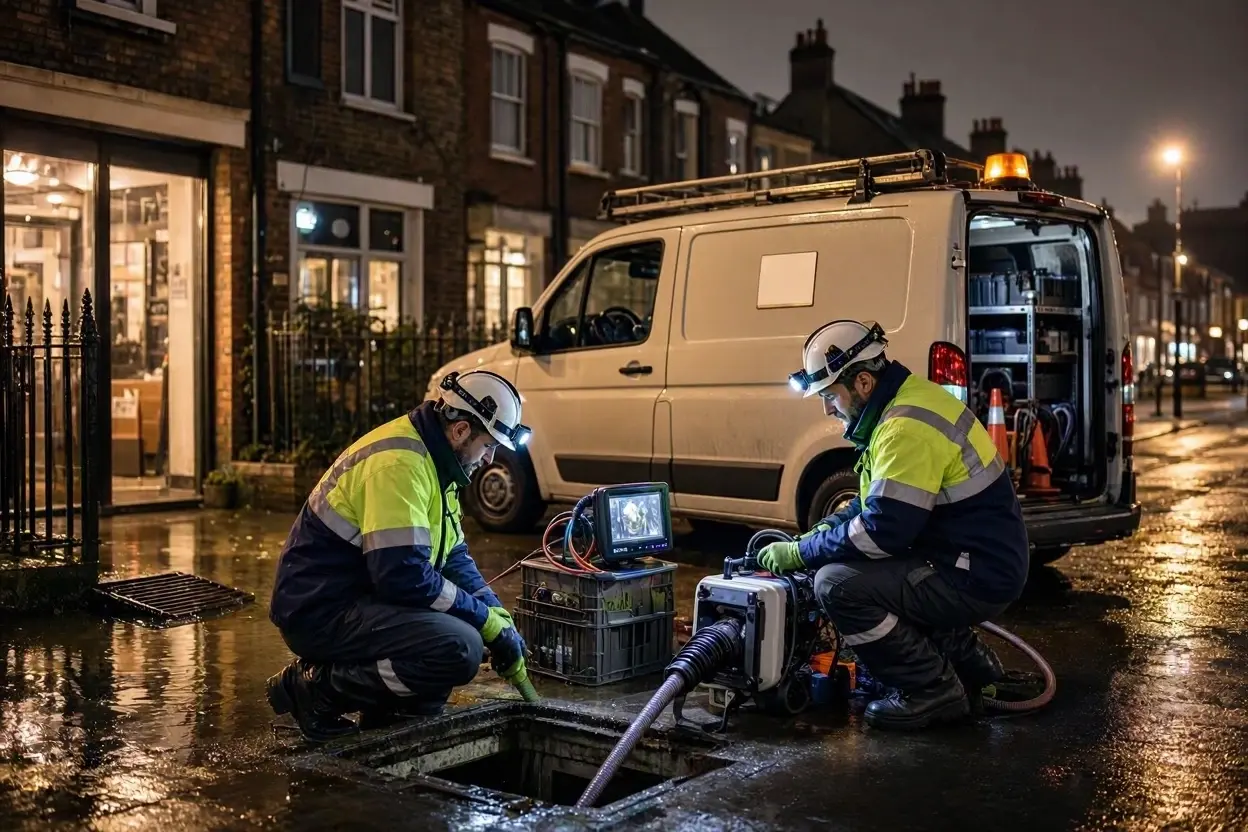
Inspection chambers can help a technician determine where water is standing and whether the blockage lies upstream or downstream. Heavy covers and confined spaces can be hazardous, so occupants should not attempt unsafe access. A trained contractor can use suitable equipment to assess the system without unnecessary disturbance.
Ask About the Initial Assessment
A responsible technician should ask about previous incidents, check the affected fixtures and consider the drainage layout. Flow tests and accessible chambers may provide enough information for a straightforward obstruction. If the cause remains uncertain, the contractor should explain what further investigation would establish and why it is worthwhile.
Understand Mechanical Clearance
Specialist rods and mechanical equipment can remove certain obstructions when pipe condition and access permit. Excessive force can damage fragile sections or push debris into a more difficult location. Clearing the line should be followed by an appropriate check of flow. Mechanical removal is not a repair for a damaged pipe.
Assess Water Jetting
High-pressure water jetting can help remove some grease and silt deposits. Pressure, nozzle choice, bends and pipe material all affect suitability. An older or damaged line may require a different approach. Ask the operator why jetting is appropriate rather than assuming that the strongest method produces the best result.
Know When CCTV Helps
Camera surveys may reveal roots, displaced joints, cracks or deposits hidden underground. They can be valuable when faults recur or structural damage is suspected. Footage still needs professional interpretation; an irregularity on screen is not automatically the cause of a blockage. Request a clear explanation connecting findings to symptoms.
Separate Clearing and Repair
Removing an obstruction restores drainage, while repairing a verified defect addresses the physical reason it may keep blocking. Some incidents require only clearance. Others justify targeted repairs or further investigation. The customer should understand what has been completed, what remains uncertain and the evidence supporting any additional recommendation.
Coordinate Shared Drainage
Flats, terraces and commercial buildings may share sections of underground drainage. Wastewater appearing in one unit can originate from a restriction elsewhere. Inform landlords or managing agents where appropriate and coordinate access with neighbours. Clear communication helps prevent continued water use that could worsen an overflow.
Selecting Assistance
For blocked drain Stevenage, ask what diagnosis is proposed, whether the pipe can safely accommodate the selected equipment and what evidence supports any recommended repair. Avoid relying on unsupported guarantees of a permanent fix.
Conclusion
Effective drainage care combines early observation, safe action and proportionate maintenance. If the same problem returns, investigate the underlying condition rather than assuming another temporary clearance will be enough.