

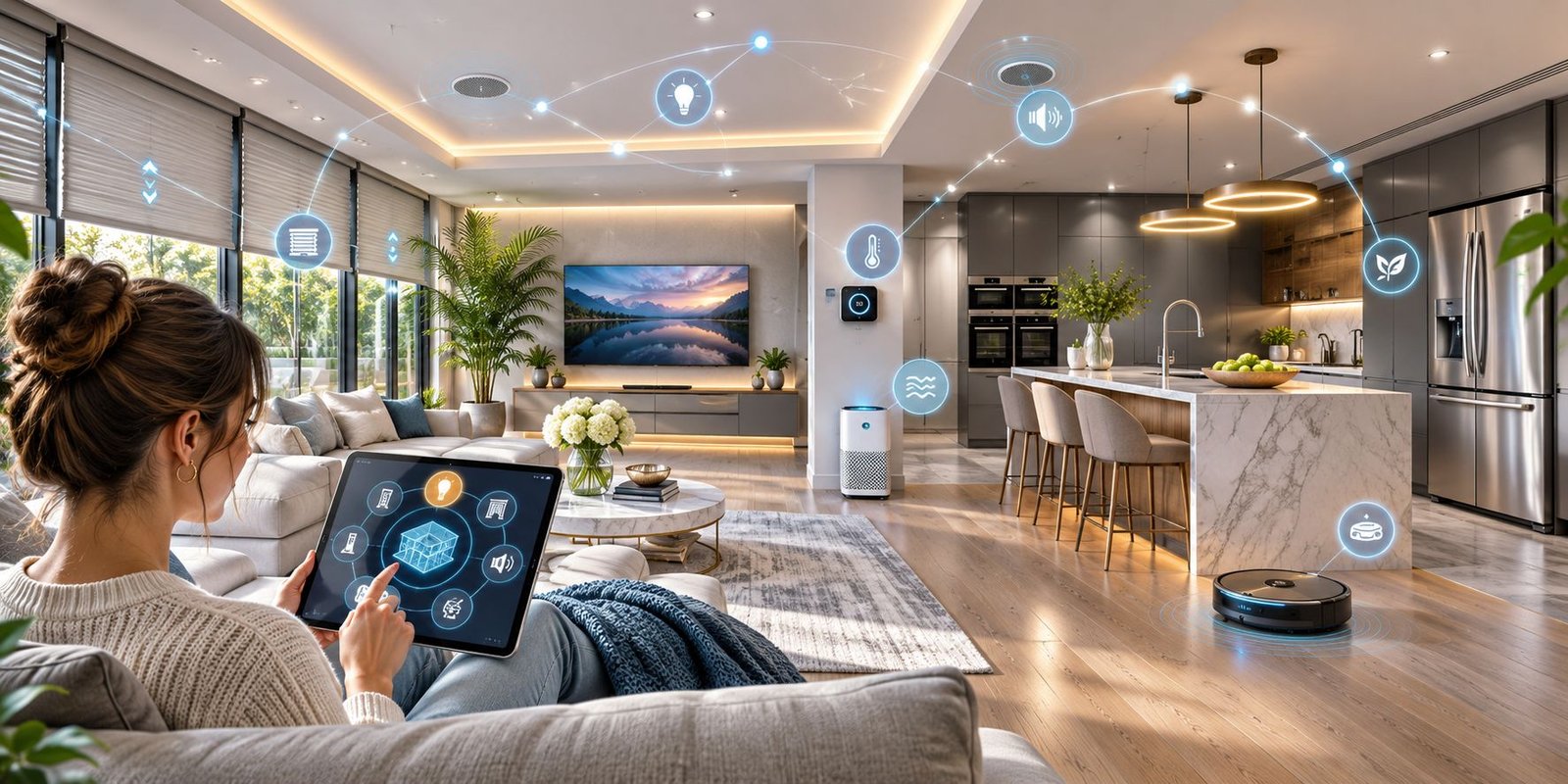
Technology for smart homes is revolutionizing the way people handle their comfort, security, and consumption of energy. With everything from automatic lights to security systems, practical improvements can help simplify life without having to spend lots of money renovating. Here are 10 Smart Home Improvement Ideas for 2026 that consider practicality, realistic price points, and useful features to think about.
Why Smart Home Upgrades Matter in 2026
Contemporary smart home technologies provide remote operation, scheduling functions, and improved energy management. Matter technology can also help in getting compatible devices to communicate between one another. Not all connected devices will have anything useful added to their features, though. The best enhancements should be either practical or decrease energy usage.
1. Install Smart Lighting
Smart lighting provides an affordable starting point for home automation. Compatible LED bulbs allow homeowners to adjust brightness, change colors, and schedule lighting through smartphone applications.
Motion sensors can illuminate hallways automatically, while outdoor lighting can activate around sunset. Smart bulbs are easy to install, whereas smart switches may require electrical work. LED technology itself provides most of the energy savings compared with traditional incandescent lighting.
2. Upgrade to a Smart Thermostat
Smart thermostats adjust heating and cooling schedules based on household routines. Some models detect occupancy, provide energy reports, and allow remote temperature adjustments.
ENERGY STAR estimates that certified smart thermostats save approximately 8% on heating and cooling bills on average. Actual savings depend on local weather, equipment, and usage. Before purchasing, confirm compatibility with your heating system, especially if your home uses individual air-conditioning units.
3. Add Smart Security Cameras
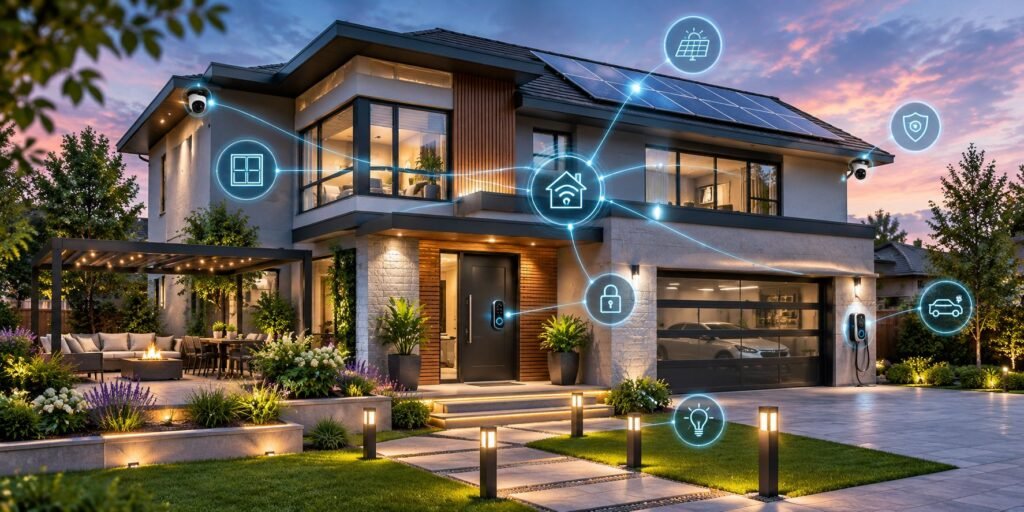
Smart cameras and video doorbells help homeowners monitor entrances and receive motion alerts. Features may include night vision, two-way communication, and remote video access.
For example, a video doorbell allows residents to communicate with delivery drivers without opening the door. Compare recording subscriptions, local storage, and privacy settings before buying. Cameras improve awareness but cannot replace strong physical security.
4. Install Smart Door Locks
Smart locks offer keyless entry using PIN codes, fingerprints, or smartphone applications. Some models also support temporary access codes for guests or maintenance workers.
This convenience is particularly useful for busy households. However, physical lock quality remains essential. Choose a model compatible with your door and consider battery life, emergency access, and regular software updates.
5. Use Smart Plugs
Smart plugs add basic automation to compatible traditional appliances. They allow users to control lamps, decorative lighting, and selected electronics remotely or through schedules.
Models with energy monitoring can also help identify electricity consumption. Before connecting any appliance, verify the plug’s electrical rating. High-power heaters and similar equipment should never be connected unless the device is specifically approved for that use.
6. Install Water Leak Sensors
Smart water leak sensors detect moisture near washing machines, sinks, and water heaters. Compatible systems send notifications when water reaches a sensor, allowing homeowners to investigate potential plumbing problems.
Advanced systems may connect to automatic shutoff valves. Although these devices cannot prevent every leak, early alerts can reduce damage when someone responds promptly. Check battery condition and sensor placement regularly.
7. Improve Home Wi-Fi Coverage
Reliable Wi-Fi supports connected cameras, speakers, lighting, and other smart devices. Weak coverage can cause delayed notifications or disconnected equipment.
A mesh Wi-Fi system may improve coverage in larger properties, while wired access points can provide stable connections. Position routers carefully and use strong passwords, modern encryption, and updated firmware. Better Wi-Fi coverage does not necessarily increase your internet provider’s maximum speed.
8. Add Automated Window Blinds
Motorized blinds allow homeowners to adjust window coverings through schedules, remote controls, or compatible voice assistants.
For example, bedroom blinds can open gradually each morning, while living room shades can close during strong afternoon sunlight. Controlling sunlight may also reduce unwanted heat gain. Battery-powered systems offer easier installation, although they require periodic charging or battery replacement.
9. Consider Smart Kitchen Appliances
Connected refrigerators, ovens, and dishwashers offer features such as temperature alerts, cooking notifications, and remote status monitoring.
These functions can simplify household routines, but connected appliances often cost more than conventional alternatives. Prioritize energy efficiency, reliability, capacity, and repair costs before purchasing. Replacing a functioning appliance solely for Wi-Fi connectivity may offer limited financial value.
10. Set Up a Smart Home Hub
Smart home hubs help coordinate compatible devices through one platform. Amazon Alexa, Google Home, Apple Home, and Samsung SmartThings support different automation features.
A bedtime routine, for example, could dim lights, adjust the thermostat, and close compatible blinds. Before choosing a system, confirm device compatibility and whether essential functions remain available during internet outages.
Smart Home Upgrade Costs in 2026
Prices vary by manufacturer, features, and installation requirements. The following approximate U.S. device-only ranges provide a basic budgeting reference.
| Upgrade | Estimated Cost |
|---|---|
| Smart lighting | $10–$50 per bulb |
| Smart thermostat | $70–$250 |
| Security camera | $40–$250 |
| Smart lock | $100–$400 |
| Smart plug | $10–$35 |
| Water leak sensor | $15–$70 |
| Mesh Wi-Fi system | $100–$400 |
| Motorized blinds | $100–$400+ per window |
| Smart kitchen appliance | $500–$3,000+ |
| Smart hub or speaker | $30–$200 |
Professional installation and subscriptions may increase overall expenses.
Choosing Compatible and Secure Devices
Before purchasing, check compatibility with existing platforms, network requirements, and manufacturer support. Matter-certified products can improve interoperability, although features still vary between ecosystems.
Protect connected devices using unique passwords, available two-factor authentication, and regular firmware updates. Consider privacy settings for cameras and microphones. Products with reliable offline controls can also be useful when internet connectivity becomes unreliable.
Frequently Asked Questions
What are the best smart home improvements for 2026?
Smart lighting, thermostats, security cameras, water leak sensors, and improved Wi-Fi are practical choices for many households.
Which smart home upgrades save electricity?
Smart thermostats and automated lighting can reduce unnecessary energy use. Actual savings depend on equipment and household habits.
Are smart home devices expensive?
Not necessarily. Basic smart plugs and bulbs are relatively affordable, while comprehensive security systems and automated blinds require larger budgets.
Can smart home devices work without internet?
Some devices support local controls and automation without internet access. Others depend on cloud services for important features.
Do smart home upgrades increase property value?
Some improvements may appeal to buyers, but increased resale value is not guaranteed. Practical functionality and installation quality matter more.
Making Smart Home Improvements Worthwhile
These 10 Smart Home Improvement Ideas for 2026 show that a more connected home does not require replacing everything at once. Start with upgrades that address genuine household needs, such as better lighting, reliable security, or improved temperature control.
Choose compatible products, account for ongoing costs, and prioritize long-term reliability. A thoughtfully planned smart home should make everyday living simpler, safer, and more comfortable.