

Is that Image is AI generated:
A stable door is a good option for individuals looking for a functional and aesthetic door that enhances airflow, convenience, and old-fashioned appeal. As compared to regular doors, a stable door comprises two sections that open separately, and thus the top section can be opened when the bottom section is closed. Initially used in horse stables, the stable door is now a popular choice in kitchens, cottages, utility rooms, and backyard entrances. Whatever your choice between a stable door and any other door, you need to understand various factors.
What Is a Stable Door?
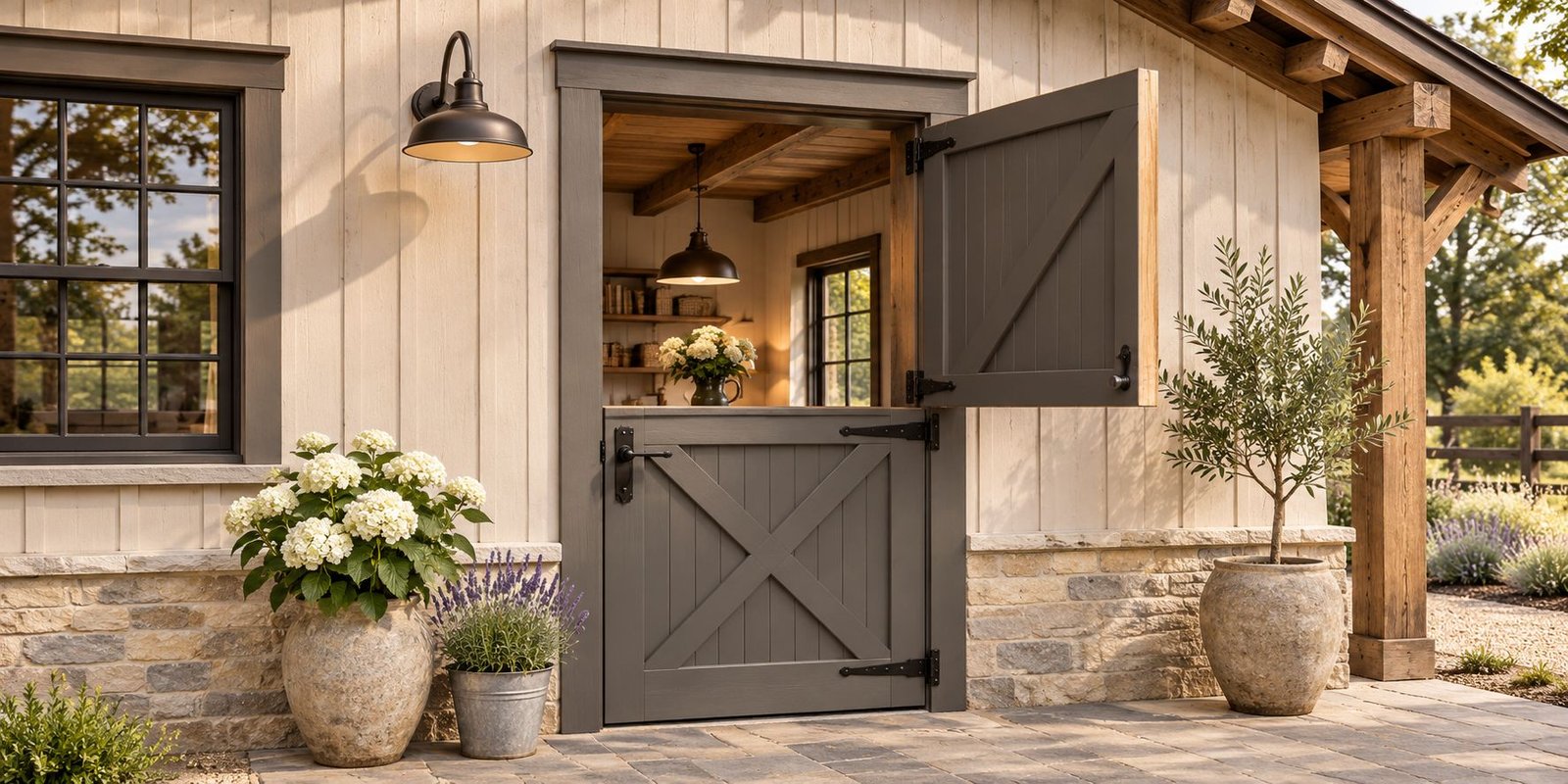
A stable door is a horizontally divided door with an upper and lower section that can operate independently. It is also called a Dutch door, particularly in the United States. Both sections can usually be secured together so the door functions like a conventional single door.
The design offers a useful combination of openness and separation. Homeowners can open the upper section to enjoy fresh air and communicate with someone outside without opening the entire doorway.
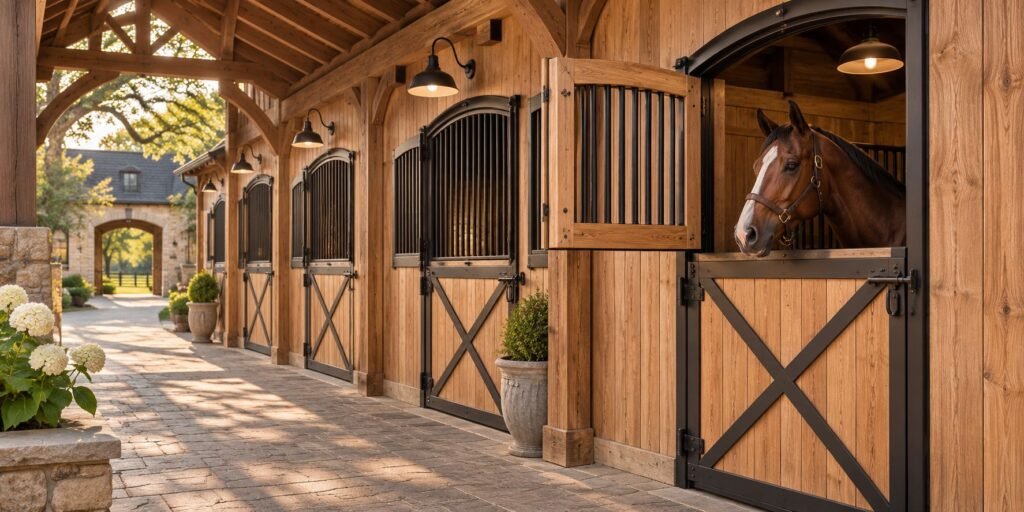
Traditionally, stable doors were installed in agricultural buildings. They allowed horses to look outside while remaining safely within their stalls. Over time, the same practical design became attractive for residential properties, especially country homes and cottages.
How Does a Stable Door Work?
A stable door uses separate hinges and suitable locking hardware for its two sections. The lower section can remain closed while the upper section swings open, providing a partial opening without requiring the entire door to move.
Most modern residential designs also include a mechanism that connects both sections. When properly secured together, they can open and close as one complete unit.
For example, someone working in a kitchen can open the upper section to improve airflow while keeping the lower section shut. When leaving the house, both sections can be closed and locked.
However, the exact operation depends on the manufacturer’s design. Locking arrangements, opening directions, and weather seals can differ between products.
Different Types of Stable Doors
Stable doors are available in several styles, allowing homeowners to choose a design that matches their property and practical requirements.
Traditional Wooden Stable Doors
Wooden stable doors are particularly suitable for cottages, farmhouses, and traditional homes. Their natural grain and warm appearance create a welcoming entrance.
Oak and other suitable hardwoods are common choices, while engineered timber can offer improved dimensional stability.
However, external wooden doors require appropriate protective finishes. Regular inspection and maintenance help prevent moisture damage, peeling paint, and deterioration.
Composite Stable Doors
Composite stable doors combine different materials to create a durable external entrance. Depending on their construction, they may feature reinforced cores, insulating materials, and protective outer surfaces.
They are popular among homeowners who want traditional styling with relatively little maintenance.
Composite designs can also provide good thermal insulation and effective locking systems, although performance depends on the specific model and installation.
uPVC Stable Doors
uPVC stable doors are another option for residential properties. They are generally easy to clean and do not require routine painting.
These doors are available in different finishes, including styles designed to resemble timber.
Their suitability depends on the quality of the frame, reinforcement, hinges, and locking hardware. A well-manufactured product may be a practical choice for busy households.
Glazed Stable Doors
Some stable doors include glazed panels in the upper section. This allows daylight into an interior even when the upper half is closed.
Glazing can be especially useful for darker kitchens and rear entrances. Homeowners should choose appropriate safety glazing and consider privacy, thermal performance, and security when comparing designs.
Stable Door Materials Compared
Is that Image is AI generated:
Choosing the right material affects appearance, maintenance, insulation, and long-term performance.
| Material | Main advantage | Potential drawback | Suitable for |
|---|---|---|---|
| Timber | Natural appearance and traditional character | Requires periodic maintenance | Cottages and heritage-style properties |
| Composite | Durable construction and relatively low maintenance | Often higher initial cost | Modern and traditional homes |
| uPVC | Easy cleaning and minimal painting requirements | Quality and appearance vary | Practical residential entrances |
| Glazed designs | More natural light | Requires appropriate glazing and privacy choices | Kitchens and garden-facing rooms |
There is no single best material for every property. A homeowner seeking a traditional appearance may prefer timber, while someone prioritising easier upkeep may favour composite or uPVC.
Benefits of Installing a Stable Door
Better Control Over Ventilation
One of the biggest advantages of a stable door is the ability to open its upper section while keeping the lower section closed.
This can provide fresh air without fully opening the entrance. It is particularly useful in kitchens, utility areas, and spaces connected to gardens.
However, an open upper section is not insect-proof, so an additional screen may be useful where insects are common.
Convenient Access and Communication
A split door allows homeowners to speak with visitors or receive small items without fully opening the entrance.
It can also make the space feel more connected to the outdoors, especially when facing a garden or courtyard.
Nevertheless, the lower half should not be treated as a security barrier when the upper section is open.
Traditional Appearance
Stable doors are strongly associated with countryside architecture. Their distinctive proportions can complement brick cottages, stone houses, and rustic interiors.
Modern versions also work with contemporary properties when paired with simple panels, understated hardware, and suitable colours.
Flexible Everyday Use
The ability to operate both sections independently gives homeowners more choices than a conventional door.
For example, the upper section can remain open during suitable weather, while both sections can be closed together when privacy, security, or protection from the elements becomes more important.
Are Stable Doors Secure?
A properly specified and installed stable door can provide effective home security. However, its split construction makes the locking mechanism, hinges, and connection between the two sections particularly important.
Homeowners should check whether both halves can be secured properly and whether the complete door assembly has suitable security features.
For external entrances, it is worth considering reinforced hardware, robust frames, and independently tested security performance where available.
An important distinction is that a stable door is not automatically secure simply because it is manufactured from composite material or fitted with multiple locks.
Installation quality and the entire door system matter.
Are Stable Doors Energy Efficient?
Modern stable doors can offer good thermal performance when they are properly insulated, weather-sealed, and installed.
Energy efficiency depends on several factors, including the door’s core material, frame construction, glazing, seals, and the quality of the fit.
Because a stable door has a horizontal joint between its two sections, the design of this connection deserves particular attention.
Poorly fitted seals can allow unwanted draughts or water penetration. Before buying, ask the supplier for the complete door assembly’s thermal performance information rather than relying only on claims about the material.
Where Can You Install a Stable Door?
Stable doors are suitable for several locations around a property, provided the design meets the requirements of the opening.
Kitchen Entrances
A kitchen opening onto a garden or courtyard is one of the most practical locations. Opening the upper section can provide airflow and a pleasant connection to the outdoors.
Back Doors
Stable doors work well as rear entrances, especially in homes with outdoor seating, gardens, or utility areas.
Homeowners can choose between full-panel and partially glazed designs according to their privacy preferences.
Utility Rooms
A utility room with external access may benefit from a split door, particularly where additional ventilation is useful.
However, ventilation requirements for appliances must still be met independently of whether the door is open.
Horse Stables and Farm Buildings
The design remains important in equestrian facilities. A correctly designed lower section helps contain the horse while allowing it to see outside.
Horse stable doors require different safety considerations from household entrance doors, including suitable opening dimensions, strong hardware, secure fastenings, and the avoidance of sharp projections.
Choosing the Right Stable Door Size
Stable doors are manufactured in different sizes, and some suppliers offer bespoke designs.
For residential installations, the correct measurements depend on the existing opening, frame, threshold, and installation system.
Before ordering, measure the opening at several points and confirm whether the supplier requires the structural opening size or the overall frame dimensions.
For horse stables, measurements must account for the animal’s size and safe movement. The British Horse Society recommends that door height should allow the horse or pony to look out comfortably.
The dimensions suitable for a home entrance should never be assumed suitable for an equestrian building.
Important Features to Check Before Buying
Selecting a stable door involves more than choosing its colour or material. Several practical details influence everyday use and long-term satisfaction.
- Locking system: Check how both sections are secured and whether the hardware is suitable for an external entrance.
- Weather protection: Look for effective seals, appropriate drainage details, and protection around the horizontal joint.
- Hinges and frame: Confirm that the hardware supports the door’s weight and allows smooth operation.
- Glazing: Consider safety glass, insulation, daylight, and privacy.
- Opening direction: Make sure the door will not obstruct nearby paths, furniture, or fixtures.
- Maintenance requirements: Ask about cleaning, lubrication, protective finishes, and warranty conditions.
Comparing these features helps prevent problems that may not be obvious when selecting a door from photographs alone.
How Much Does a Stable Door Cost?
The price of a stable door varies according to its material, dimensions, security features, glazing, and installation requirements.
Standard uPVC designs may have a lower purchase price than some composite or bespoke hardwood alternatives. However, premium finishes and additional features can change the comparison.
Installation costs also depend on whether the existing frame can be retained, whether structural adjustments are necessary, and whether the threshold requires modification.
Rather than relying on a single advertised price, homeowners should request an itemised quotation covering the door, frame, hardware, fitting, finishing, and any applicable taxes.
This makes it easier to compare the total cost of different options fairly.
Stable Door Installation and Maintenance Tips
Correct installation is essential for smooth operation, weather resistance, and security.
The frame must be properly aligned, while both door sections must close correctly and engage with their locking hardware. The horizontal meeting point also requires careful adjustment to prevent excessive gaps.
Professional fitting is particularly advisable when installing an external door with advanced locks or complex weather seals.
Maintenance depends on the material. Timber doors generally require regular inspection of their protective finish, while composite and uPVC designs can usually be cleaned with suitable mild products.
Regardless of material, homeowners should periodically inspect hinges, seals, locks, and drainage openings. Any difficulty closing the door should be investigated before it causes additional wear.
Common Mistakes to Avoid When Choosing a Stable Door
A common mistake is selecting a door based entirely on appearance. Although style matters, poor hardware or inadequate weather sealing can make an attractive door inconvenient to use.
Another mistake is assuming every stable door offers the same security or insulation. These qualities vary considerably between individual models.
Homeowners should also avoid ordering from measurements taken at only one point, particularly when replacing doors in older buildings.
Finally, consider how often the upper section will genuinely be used. A stable door offers valuable flexibility, but a standard door may be more appropriate where separate opening sections provide little practical benefit.
Conclusion
A stable door combines traditional character with practical everyday flexibility. Its split design allows improved control over ventilation and access while providing the option to operate as a conventional door. Timber, composite, and uPVC versions offer different advantages, so the right choice depends on your property’s style, maintenance preferences, and budget. Before purchasing, focus on accurate measurements, reliable locking systems, weather resistance, and installation quality. A carefully selected stable door can provide an attractive, functional entrance that suits your home for years to come.
Frequently Asked Questions
What is the difference between a stable door and a Dutch door?
There is no fundamental design difference. Both terms describe a horizontally divided door whose upper and lower sections can open independently. Stable door is more common in British English, while Dutch door is widely used in American English.
Can a stable door be used as a front door?
Yes. A stable door can serve as a front entrance when the complete assembly provides suitable security, weather protection, accessibility, and thermal performance.
Can you install a stable door in an existing doorway?
Often, yes. However, installation depends on the opening dimensions, frame condition, threshold, and structural requirements. A professional assessment can determine whether a replacement can be fitted without additional alterations.
Do stable doors let in rain?
A properly designed and closed external stable door should resist normal weather exposure. However, damaged seals, poor installation, or unsuitable drainage details may allow water penetration, particularly around the horizontal joint.
Are stable doors suitable for homes with pets?
They can be useful, but the lower section is not a guaranteed pet barrier. Some animals may jump over or climb it. The suitability depends on the pet, door height, supervision, and surrounding environment.